Craniosacral Therapy (CST) is a gentle, manual (hands on) treatment. CST works with the craniosacral system, which consists of the cerebrospinal fluid (CSF) produced by the brain and the membranes that contain it. The CSF flows around and among the structures of the brain and also around the spinal cord. This is the fluid that is collected and analyzed during a lumbar puncture procedure. The CSF provides shock absorption and protection, nourishment, and waste removal for the central nervous system (brain and spinal cord).
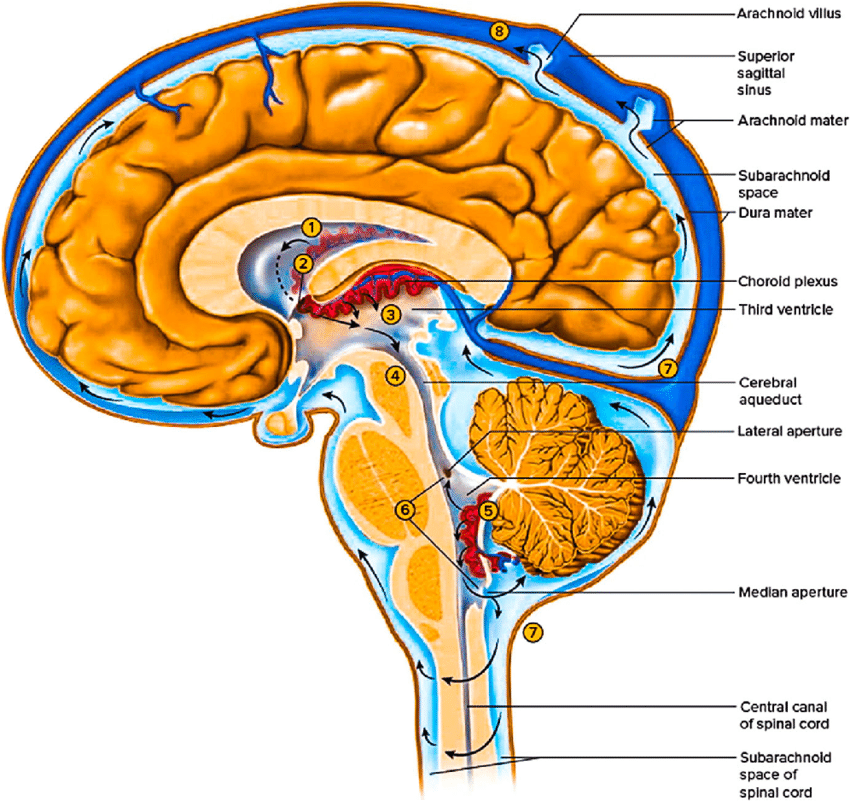
Image showing the production and flow of the cerebrospinal fluid around the brain. CSF also travels around the length of the spinal cord. Image citation: Nonreflecting Boundary Conditions for a CSF Model of Fourth Ventricle: Spinal SAS Dynamics – Scientific Figure on ResearchGate. Available from: https://www.researchgate.net/figure/Cerebrospinal-fluid-formation-absorption-and-circulation-around-and-within-the-brain-1_fig1_342149030 [accessed 4 Sept 2025]
The craniosacral system is dynamic, with CSF moving within the membrane system. Just like the heart rate and breathing rate, we can identify and feel the craniosacral rhythm. This rhythm is slower and more subtle than the heart rate and breathing rate, but we can learn to feel it with training. The palpating this rhythm provides the basis for craniosacral therapy.
Using a very light touch, your craniosacral therapist will assess the craniosacral rhythm. This rhythm expresses throughout the body. Most of the treatment typically occurs along the spinal, torso, and at the head, but can also be on the limbs. During the assessment, we’ll evaluate the speed, amplitude and balance of the rhythm and use a light touch treatment to improve the quality and balance of the rhythm as needed.
Craniosacral Therapy Sessions
During the treatment session, you’ll lie in a comfortable, face up position on a treatment table. You’ll be fully clothed during treatment sessions. Your therapist will begin by assessing the craniosacral rhythm at your feet. You are free to talk and ask questions during the session or to be quiet. At times, your therapist may ask questions about what you are feeling or sensing.
Many clients find CST deeply relaxing. There can be many types of experiences during a session. You may feel tissue releases, surfacing of old memories, emotions, or a number of other bodily sensations, images, or experiences. Other clients do not notice much during a session, but may experience shifts in the following days as the craniosacral system continues to integrate its improved rhythm pattern.
Craniosacral Therapy is beneficial for a variety of conditions. Our central nervous system is connected to everything we do and experience. Improving the craniosacral rhythm impacts this and other physiological systems. Clients have found CST to help with pain, stress, digestive symptoms, anxiety and depression, memory and cognition, mouth and jaw pain, and many other symptoms. Others find CST helpful in their meditative and spiritual practices.
